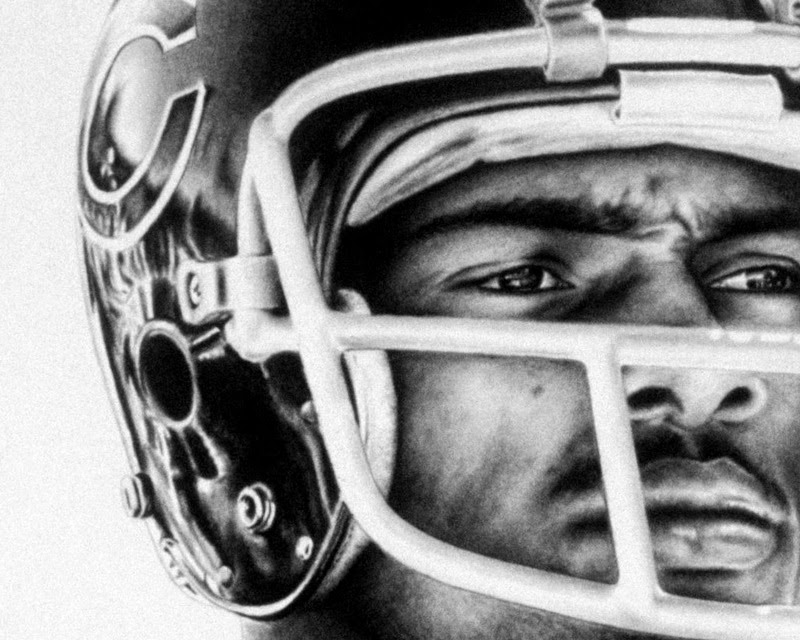
From the outstanding book "Legacy" by James Kerr comes a great story of perseverance and resilience:
Champions do extra.
It's true in all kinds of sport. There's the story of marksman Karoly Takacs who was denied a place in the 1936 Olympics as, in pre-war Hungary, only officers could qualify. Undeterred, he set his sights on the 1940 games. But in 1938 a hand grenade shattered his his right hand -- his shooting hand. He trained himself to shoot with his left hand but the 1940 and 1944 Olympics were cancelled as war ravaged Europe. Finally, in 1948, thirty-eight-year-old Takacs competed in his first Olympic event, winning gold and setting a new world record, a right-handeder shooting left-handed.
Champions do extra.
Showing posts with label Adversity. Show all posts
Monday, July 29, 2019
Sunday, May 29, 2016
DEFEATING THE INSTINCT TO SLACK OFF
"There is something that can happen to every athlete, every human being -- it's the instinct to slack off, to give in to the pain, to give less than your best...the instinct to hope to win through luck or your opponents' not doing their best, instead of going to the limit and past your limit, where victory is always to be found. Defeating those negative instincts that are out to defeat us is the difference between winning and losing, and we face that battle every day of our lives."
Jesse Owens, Olympic Champion
Labels:
Adversity,
Attitude,
Courage,
Determination,
Discipline,
Perseverance,
Self-Improvement,
Success,
Work
Thursday, March 24, 2016
3 GUIDELINES FROM LARRY LEGEND
“Don’t let winning make you soft.
Don’t
let losing make you quit.
Don’t let your teammates down in any situation”
– Larry
Bird
Sunday, June 28, 2015
Friday, June 12, 2015
THE BEST FOCUS ON THE PRESENT
One of the terms we utilize with our players comes from Coach Don Meyer. We tell them we want them to be NBA players. NBA stands for Next Best Action. In other words, we want them constantly player in the future and not in the past. Great shooters have poor memories. They never remember their last missed shot but instead, work to get their next make.
It is the process oriented teaching that Coach Nick Saban drives home to his players. He is not interested in his players checking the score or time on the clock as that information has nothing to do with them "dominating their opponent" on the next snap.
While at LSU, baseball coach Skip Bertman had a small toy toilet in the dugout. When a player had a bad at bat, a fielder committed an error, or a pitcher had a bad inning, they came in and "flushed" the toy toilet as a physical symbol that it's over -- it's gone -- time to focus on the here and now.
Of course this isn't an easy habit to develop -- especially for great competitors. In his book "How Champions Think," Dr. Bob Rotella recalled a conversation where Dean Smith spoke to Michael Jordan about letting go of a bad game:
I remember hearing Michael Jordan speak some year ago about a lesson he’d learned from Dean Smith about dealing with failure. Michael had left the University of North Carolina and player a couple of years in the NBA. But he returned to Chapel Hill in the off-season to play pickup games with other Tar Heel alumni and talk with Coach Smith.
On this occasion, he was talking to the coach about how hard it was for him to accept the seemingly cavalier attitude of his Bulls teammates toward losing. After a loss, he said, he would stay in the shower for an hour, replaying everything he did wrong as the hot water pounded over his body. Or he’d sit by his locker with a towel over his head, marinating his brain in images of mistakes. His teammates, on the other hand, would shower and get out of there. Michael thought they didn’t care.
Dean Smith disabused him of that notion. He told Michael that if he wanted to become the player he could be, he ought to give himself no more than ten or twenty minutes to reflect on a bad performance. That would be enough to learn everything that could be learned from it. After that, he advised Michael, he ought to think about playing great basketball in the next game—or do something else and not think about basketball at all. “If all you do is keep reliving your mistakes, you’re going to destroy yourself,” Dean said.
Labels:
Adversity,
Attitude,
Competing,
Mental Approach,
Michael Jordan,
Process
Thursday, April 23, 2015
ATTITUDE + DETERMINATION CONQUERS ALL
The following video is an account of a young man with a tremendous attitude and great determination. After losing his eyesight to cancer he went on to play high school football.
But he didn't stop there. Now he is a member of the USC Trojan football team as a long snapper!
Labels:
Adversity,
Attitude,
Competing,
Determination,
Mental Toughness,
Toughness
Friday, December 12, 2014
Tuesday, August 12, 2014
DEREK JETER: TOUGHNESS AND THE TEST OF TIME
I came across an absolutely great article on Derek Jeter written by Joel Sherman for the New York Post. It is possibly the best thing I've read about Jeter and some of the reasons he been so consistently successful. I've written before but to me, the true test of greatness comes with the test of time. There are many that are good, even great for a short period of time but it is the long haul that truly show us greatness.
I strongly suggest you take the time to read the entire article here -- until, here are some great excerpts:
On Friday night, Jeter started his 2,610th game at shortstop. That moved him past Omar Vizquel for the most in major league history. It might not be Lou Gehrig or Cal Ripken stuff, and it came and went without confetti and fanfare. But you do not start that many games in the middle infield — all those double-play pivots, etc. — without a sense of responsibility, a reservoir of pride and a steely constitution. The day-after-day mental and physical grind ultimately defeats every athlete. But some endure better than others. And Jeter is at the top 1 percent.
“We all consider rolling over and shutting the alarm clock off,” Joe Torre said by phone. “Jeter never rolls over. He gets out of bed. It is never a consideration to take a day off. It is a sense of responsibility to his team and to himself.”
I remember a conversation long ago with Gene Michael when he was still the Yankees general manager. We were discussing the traditional five tools — hitting, hitting for power, running, fielding and throwing.
That day I disagreed with the confines of the five tools. I suggested there were so many more than five tools. Aptitude was vital. You could have five tools, but if you couldn’t apply them, what was the use? Victor Martinez might only have two tools, but he has pretty much maximized them. That is so much more valuable than having five that excite scouts but never come out in games with consistency.
Grace under pressure is a tool. Again, you could have the physical stuff down, but if you can’t do it with 40,000 people in attendance or in October, what is the point?
Discipline is a tool. Are you going to keep working out, avoid perks that could drain your energy and skill?
And durability is a tool. Danny Tartabull used to tell me to project his stats over a full season and I finally told him, “Why? You never play a full season.” Mark Buehrle might not be blessed with the stuff that makes scouts drool, but wind him up and he gives you 200 innings. Every year. Year after year.
Because I believe it is in all these areas beyond the traditional tools that Jeter was an A-plus and took very good traditional tools to a Hall-of-Fame level.
His aptitude, his grace under pressure, his discipline and — for me — especially his toughness.
Chili Davis Code: If I am playing, I am healthy enough to play. He never played the “I am 80 percent” game to provide an alibi. Never told you off the record how he was really feeling, again, as a way to set up the excuse. “I’m all right.” That he what he told managers and media.
Jeter felt a responsibility to play, that the team was best when he did. Torre and Joe Girardi have known they could write his name into the lineup game after game, season after season. Do you know how much easier that makes the managing job?
“There was a playoff series in which he had pretty much a broken hand, got shot up for Game 1, couldn’t feel his hand and said he would rather just play with the pain,” Torre said. “There was never a consideration that he wouldn’t play. He came to the ballpark to play. It certainly made my job a whole lot easier. You talk about a guy who is a leader. You have someone who wants to rest, they look across the locker room and see him. He forced other people to play, not literally, but by example.”
Labels:
Accountability,
Adversity,
Attitude,
Teammates,
Toughness,
Work Ethic
Wednesday, June 18, 2014
YOU HAVE TO KEEP PUSHING YOURSELF
You can go through the annals of history and it will be documented that the vast majority of greatness came about as a result of long, hard, dedicated work -- at times unsupervised -- because of the desire of the individual to excel.
"I found this sandbank by the Pearl River near my hometown of Columbia, Mississippi. I laid out a course of 65 yards or so. Sixty-five yards on sand is like 120 on turf. But running on sand helps you make your cuts at full speed. I try to pick the heat of the day to run in, but sometimes the sand will get so hot you can't stand in place. It'll blister your feet. You get to the point where you have to keep pushing yourself. You stop, throw up, and push yourself again. There's no one to feel sorry for you."
-Walter Payton
Thursday, January 16, 2014
Friday, August 9, 2013
KEEP THE WINNING SPIRIT ALIVE
There will be days when it is difficult to muster enough to be our best. We may be tired or frustrated or in a bad mood. There may be unforeseen circumstances and distractions, setbacks and injuries. Professional or personal issues may arise. Nevertheless, these are the times when it is most important to push onward and stay focused. We do not want to give in to a belief that we are victims of circumstances. Even in our darkest hours and toughest challenges, we must give it everything we have if we wish to succeed.
The winning spirit is kept alive by living and performing in the moment, visualizing success, finding the support of a coach and inner circle, making a personal commitment to excellence, living a discipline life, affirming our truest values -- all while believing in our ability to achieve our goal.
From "The Winning Spirit" by Joe Montana
Monday, June 10, 2013
CHAMPIONS BELIEVE YOU LEARN AND GROW FROM ADVERSITY
"If it weren't for the dark days, we wouldn't
know what it is to walk in the light."
Champions believe if you remove the adversity, you remove the victory. As a result, they tend to view adversity as a challenge through which learning and growing occurs. Their world view is evident in the way they describe the adversities they face. While average people choose the path of least resistance, world-class performers operate at a higher level of awareness. They understand that stress and struggle are the key factors in becoming mentally tough. While average people watch television and hang out at happy hour, the great ones continue to push themselves mentally and physically to the point of exhaustion. Only then will you see them in rest and recovery situations. Adversity to average people equals pain. Adversity to world-class performers is their mental training ground. It's how they become mentally tough. Average people scorn adversity. Those who are world class don't welcome adversity; yet they see it as the ultimate catalyst for mental growth, as well as the contrast needed to recognize the beauty of life.
From "177 Mental Toughness Secrets of the World Class" by Steve Siebold
Labels:
Adversity,
Attitude,
Character,
Determination,
Mental Approach,
Mental Toughness,
Motivation
Monday, May 20, 2013
YOU WORK AS HARD AS YOU CAN AS LONG AS YOU CAN
"I used to work so hard that I would often vomit after working out. This was whether I was at Jackson State or with the Bears. People would ask me why I could work like that even after I was a starter in the NFL, an All-Pro. I always had a difficult time workout out with other people who didn't share that belief. And I always thought, 'That's just the way you do it.' You work as hard as you can for as along as you can and the small gains you make will eventually pay off."
From "Never Die Easy" by Walter Payton with Don Yaeger
Thursday, April 4, 2013
WARE THINKING OF HIS TEAMMATES
The following is an excerpt from a story on CNN.com written by Ben Brumfield and Michael Martinez. You can read the entire article here:
Kevin Ware's leg may be broken but not his spirit.
Ware said to himself that "I'm either going to cry ... or I'm just going to try to say some words (to help the team)." He thought of his team and put the pain behind him.
Kevin Ware's leg may be broken but not his spirit.
Not in the least bit.
And while his teammates were horrified at the gruesome injury, Ware said it was divine providence.
"This is all God. This is all God's plan. He would never let anything happen that He wouldn't want to happen," he said.
Teammate Luke Hancock came over to Ware as he lay on the floor and said a prayer for him.
Ware said to himself that "I'm either going to cry ... or I'm just going to try to say some words (to help the team)." He thought of his team and put the pain behind him.
In a two-hour surgery, Ware's broken tibia was straightened and a rod was inserted into it, according to a statement from Kenneth Klein, senior associate athletic director for media relations at the university.
For the team and victory
In spite of the pain and the road to recovery ahead, Ware is still thinking of his team, not himself.
"I'll be fine, but (we've) still got to win this championship," he said.
Mr. Inspiration is ready for the Final Four, where his team is two games away from a potential national championship.
He has already made his way to Atlanta to cheer the Cardinals on in person. During his interview with CNN, he and his mother donned T-shirts with the words "Win it for Kevin."
Thursday, October 25, 2012
IT'S "WHAT CAN BE" THAT MEASURES WORTH
The following is a poem written by Dan Clark for Anthony Robles. It comes from Roble's book "Unstoppable." Want to learn more about Robles? Check out one of our previous blog posts: http://goo.gl/mwgVC.
Every soul who comes to earth
With a leg -- or two -- at birth
Must wrestle his opponents knowing
It's not what it is, it's what can be that measures worth.
Make it hard, just make it possible
And through pain I'll not complain,
My spirit is unconquerable
Fearless I will face each foe, for I know
I am capable, I don't care what's probable
Through blood, sweat and tears
I am unstoppable.
Labels:
Adversity,
Competing,
Courage,
Dreaming,
Goals,
Motivation,
Perseverance,
Preparation,
Process,
Sacrifice,
Success,
Work Ethic
Wednesday, October 10, 2012
ASK WHY, NOT WHO
The following comes from "Go For Gold" by John Maxwell:
The next time you experience a failure, think about why you failed instead of who was at fault. Analyze any failure:
• What lessons have I learned?
• Am I grateful for this experience?
• How can I turn the failure into success?
• Practically speaking, where do I go from here?
• Who else has failed in this way before, and how can that person help me?
• How can my experience help others someday to keep from failing?
• Did I fail because of another person, because of my situation, or because of myself?
• Did I actually fail, or did I fall short of an unrealistically high standard?
• Where did I succeed as well as fail?
"Be the first to take responsibility for finding
answers when things go wrong for your team."
-John Maxwell-
Friday, September 28, 2012
HOW BAD DO YOU WANT IT?
How bad to you want it? Look closely and see how many NBA "stars" you recognize. Than take a moment to understand that all of these clips have them working out not with their team but with individual trainers they hire to grow their game. How bad do you want it? The "stars" of the game weren't born that way! They got there through tremendous hard work on a continuous basis. So ---- how bad do you want it?
Thursday, September 27, 2012
Wednesday, June 27, 2012
I TOLD MYSELF I WAS UNSTOPPABLE
A sold-out crowd of more than 17,000 watched from the risers of the Wells Fargo Center in Philadelphia on March 19, 2011 at Arizona State University senior Anthony Robles emerged from the locker room on crutches. After handing them to ASU assistant coach Brian Stith, he hopped to the corner of the mat, crouched down on one knee, and waited for the whistle that would signal the start of his final wrestling match.
"I told myself I was unstoppable," says Robles of that moment. "I had put way too much into it to go in there and not come out with a national title."
That day, Robles, who was born without a right leg and permanently traded in a prosthetic one for crutches at the age of 3, defeated defending national champ Matt McConough 7-1 to become the first disabled wrestler in history to win a national college title.
By Alison Miller of Spirit Magazine
Labels:
Adversity,
Attitude,
Character,
Competing,
Courage,
Determination,
Dreaming,
Faith,
Goals,
Mental Toughness,
Passion,
Perseverance,
Sacrifice,
Video,
Work Ethic
Tuesday, May 22, 2012
Subscribe to:
Posts (Atom)